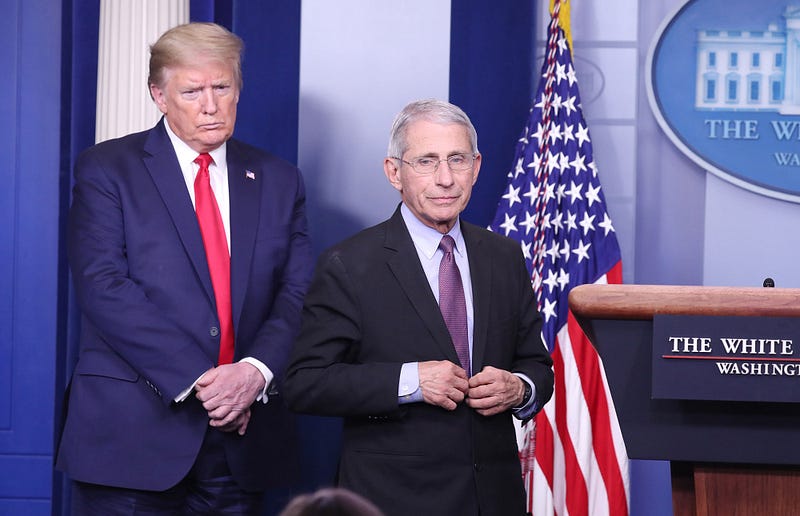
It is not so often that a politician giving press interview accompanied by a scientist. The CoVID-19 has brought some scientists out of the lab and into the spotlight. The small field of epidemiological modelling suddenly seems to shape the fate of countries and economies. Major decisions are made using the models of how the pandemic evolves and the study of various policies on the spread of the infection.
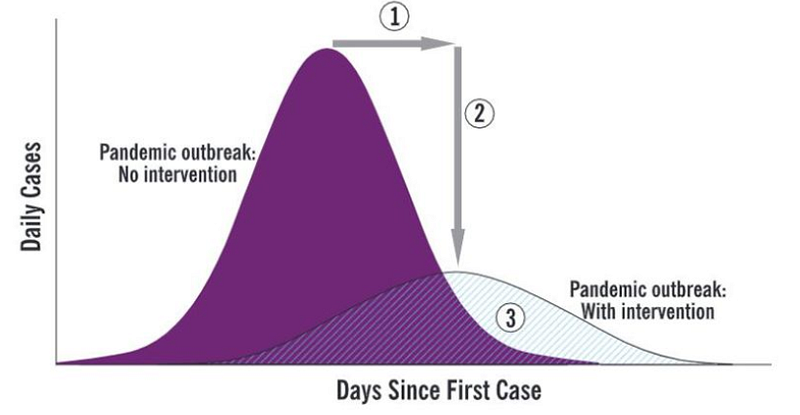
This is a new example of technocracy where a scientific discipline contributes so centrally on a large scale societal concern. The distinction is both on the scale it applied but also on the quantitative nature of the discipline. You would rarely hear the general public talking about a mathematical function yet on "flattening it." All eyes are on the current data and the simulated number of cases and deaths.
These epidemiological models are tools based on mathematical approaches augmented with numerical simulation. And we can see how strongly they help with decision making. Similar to how statistics and machine learning has revolutionized industry under the umbrella of data science, I see a potential for numerical simulations to make an impact under the umbrella of decision science. Decision science is not as popular as its adjacent field data science. But many analytical applications of data science also helps with the predictive or prescription analytics used for the purpose of decision making. After all, both terms are really marketing phrases to catch mathematical, data-intensive and numeric approaches.
Agent-Based Modelling
My favourite model for society is agent-based modelling. In these kinds of models, each contributor to the system dynamic is modelled as an agent with input/outputs and interactions in between. The idea is to capture the emergent properties of a population where a mean-field approach can not describe. A simplified version can assume each group of the population as an agent and model their interaction with an average effective parameter. These parameters can be learned using machine learning. A notable example is a model generated by Youyang Gu.
I should also note, models are models, not a crystal ball. So one needs to understand and expect how to use them. See this coverage from the Economist:
Early projections of covid-19 in America underestimated its severity. Some 80 days have now passed since the first death from covid-19 occurred on America's shores. Since then over 90,000 people have died...
With this note, mathematical modelling can be a useful tool for informing policy. I hope to see them used more.