This story in WSJ can be a good MBA case study on the failed efforts of GE trying to build a software business on top of their industrial (hardware) strength. The idea was that if GE has so many devices (from jet engines to MRIs) and customers in the field, it can develop a software services business mainly on top of Industrial IoT and data. GE Digital mantra is to "put industrial data to work". The concept is to find ways to generate value or monetize the industrial data already available on GE devices.
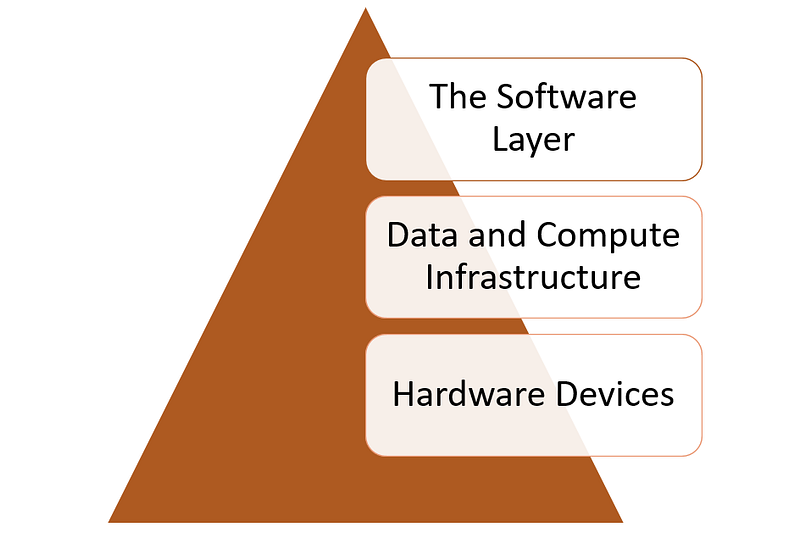
So assuming a layered value stack for an IoT software product, they have a superior hardware and device layer. They needed to build systems to capture the data and process it. That is the datacenter and compute components. Call this the software infrastructure layer. Then they need a software layer that provides value in terms of analytics and predictions that helps with the management, repair, or utilization of the industrial hardware assets.
Apparently GE digital is not doing great. And it is not the only story. The road of enterprise digital transformation is quite a rocky one!
Here are a few questions executives need to consider to succeed in transitioning or growing new digital businesses:
What is your distinct software layer? How do you distinguish it from your current systems?
It is easy to forget the distinct role software plays and the different process and management structure its development entails. Most often non-software native companies continue to adopt a waterfall and slow-moving process to their digital efforts as well. The key distinction of the software business is its way of development based on rapid iterations, deployment to the field and constant use of experimentation. This becomes even more critical when the software is analytic and AI-based.
I find the most difficult obstacle is the cultural clash between the software development's agile approach and any other type of technology and business. It is hard to fully embrace a software-first approach in companies that have a history of non-software.
What are the success criteria for the software layer? How fast can you iterate and experiment to improve the success metric?
Developing software, specifically, the ones based on data and AI requires a scientific methodology approach. This means to deploy solutions fast and experiment on the outcome of various hypotheses. It is customary for any engineering firm to take years for a product development and a few months before any updates or improvements. In the software world, success requires you need to ship a few times a day!
What "flywheel" and compounding effects are you incorporating in your software?
In top tech companies, the data of a user can help with the software execution on another user. Think about Facebook where each person's interaction with a content helps the software to serve more relevant content to the next user. Each kilometer of a Tesla driven helps with the next one's autopilot to behave better. I believe systems like this truly distinguishes software companies (like Tesla) from just dead-code companies (like Ford).
Hope you find this stimulating. Please let me know the questions do you find important in the digital transformation of businesses.